
Key takeaways
- Security teams struggle more with clarity than visibility when managing human risk.
- Proofpoint Human Resilience Workbench turns fragmented signals into actionable, measurable risk insights.
- Teams get built-in risk profiles to help them take immediate, targeted action to reduce risk.
The Challenge with Human Risk Today
Security teams don’t have a visibility problem. They have a clarity problem. They’re surrounded by data, such as phishing simulation results, training completion rates, and isolated incident reports. But those signals live in silos. Security teams are left to manually connect, normalize, and interpret them, making it difficult to answer the most important question: “who actually poses risk right now, and what should we do about it?”
At the same time, human-targeted attacks continue to drive the majority of breaches. According to Verizon’s 2026 Data Breach Investigations Report, 60% of breaches involve the human element. Organizations are under growing pressure to prove real security outcomes, not just activity metrics. Traditional approaches fall short because they measure participation, not impact.
Meet Proofpoint Human Resilience Workbench
Proofpoint Human Resilience Workbench (HRW) is designed to help organizations measure, prioritize, and reduce human risk with precision and confidence. It provides a unified view of user risk using pre-integrated risk signals across behavior, training activity, and real-world threat exposure, eliminating the need to aggregate and rationalize disparate data sources.
Because these risk signals are pre-integrated and pre-weighted, organizations can immediately access meaningful risk insights without building integrations, tuning scoring models, or managing complex data pipelines.
This gives security teams a clearer picture of user risk and allows them to move beyond guesswork to take targeted, effective action.
Human Resilience Workbench is available as part of Proofpoint’s Collaboration Security Tier 3 and Prime packages, making it easy to extend existing investments into a more outcome-driven approach to human risk management.
What Makes It Different?
While many solutions require organizations to stitch together data and define their own risk models, HRW is built for action on Day One with pre-integrated signals and built-in risk weighting. By combining real-world threat intelligence with behavioral analytics, it shows you not only what users do in simulations, but how they respond to real threats—and what to do next.
The result is continuous, defensible risk reduction across the human attack surface.
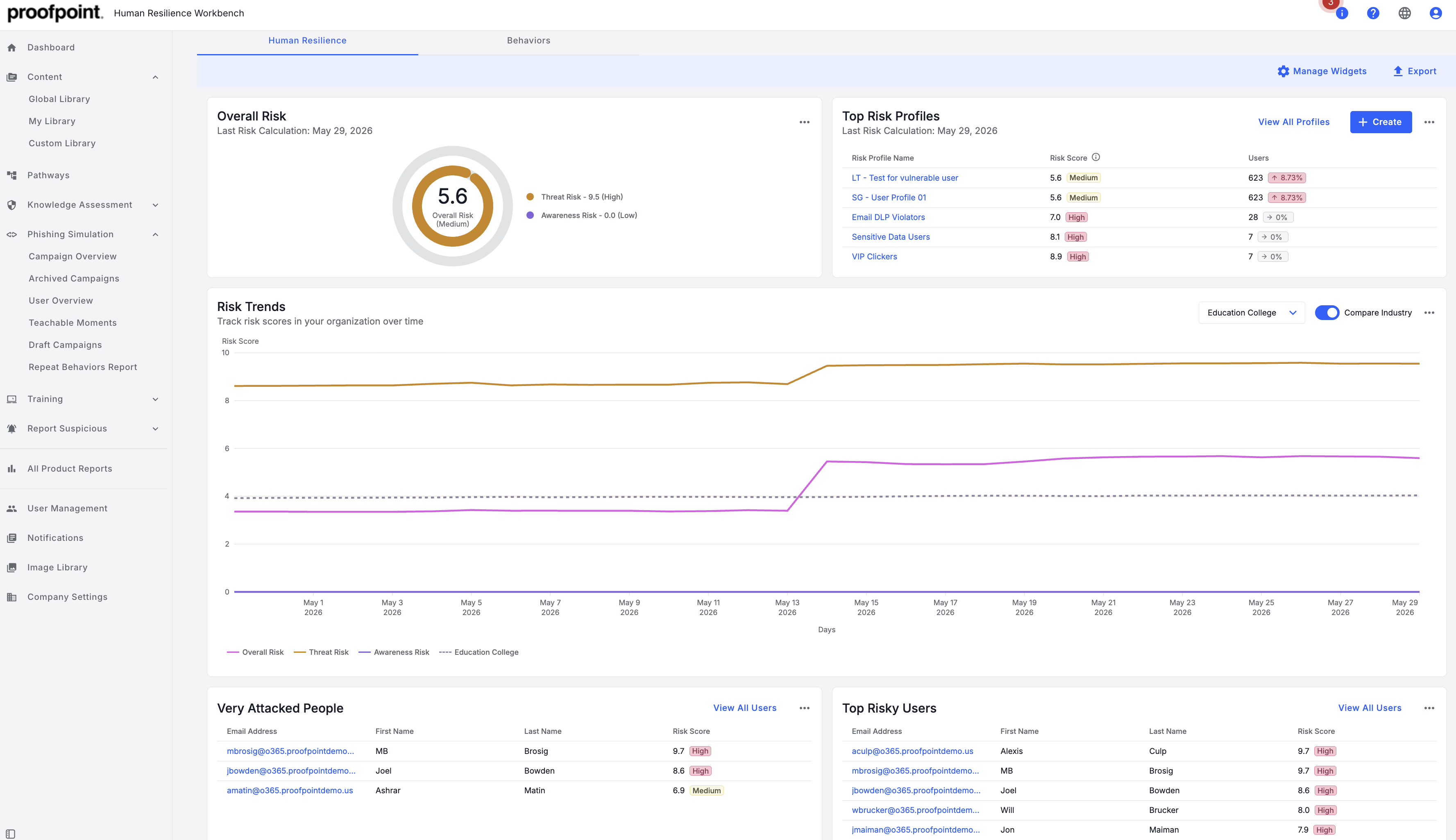
Figure 1. HRW dashboard provides organization-wide visibility into human risk.
From Insight to Impact: What You Can Do with HRW
Rather than focusing on features, HRW is designed around outcomes. It helps teams understand risk in real terms, prioritize what matters most, and take precise action where it will have the greatest impact.
Security teams can identify high-risk users and behaviors, apply targeted interventions, and reduce risk without adding unnecessary friction to the broader workforce. At the same time, built-in reporting makes it easier to demonstrate measurable progress to leadership. All of this is delivered with greater speed and consistency, enabling teams to scale human risk management without increasing operational overhead.
Turn risk insights into immediate action
Knowing who is risky is only half the battle. Acting on that insight quickly and effectively is where many programs struggle. HRW bridges this gap with ready-to-use predefined risk profiles, enabling teams to move from insight to action immediately without manual segmentation or analysis.
These profiles—including Sensitive Data Users, Vulnerable Compromised Accounts, VIP Clickers, and Clickers with Failed Phishing—are designed to make human risk actionable from Day One. These profiles are part of HRW’s out-of-the-box design, helping organizations accelerate time-to-value and operationalize human risk management.
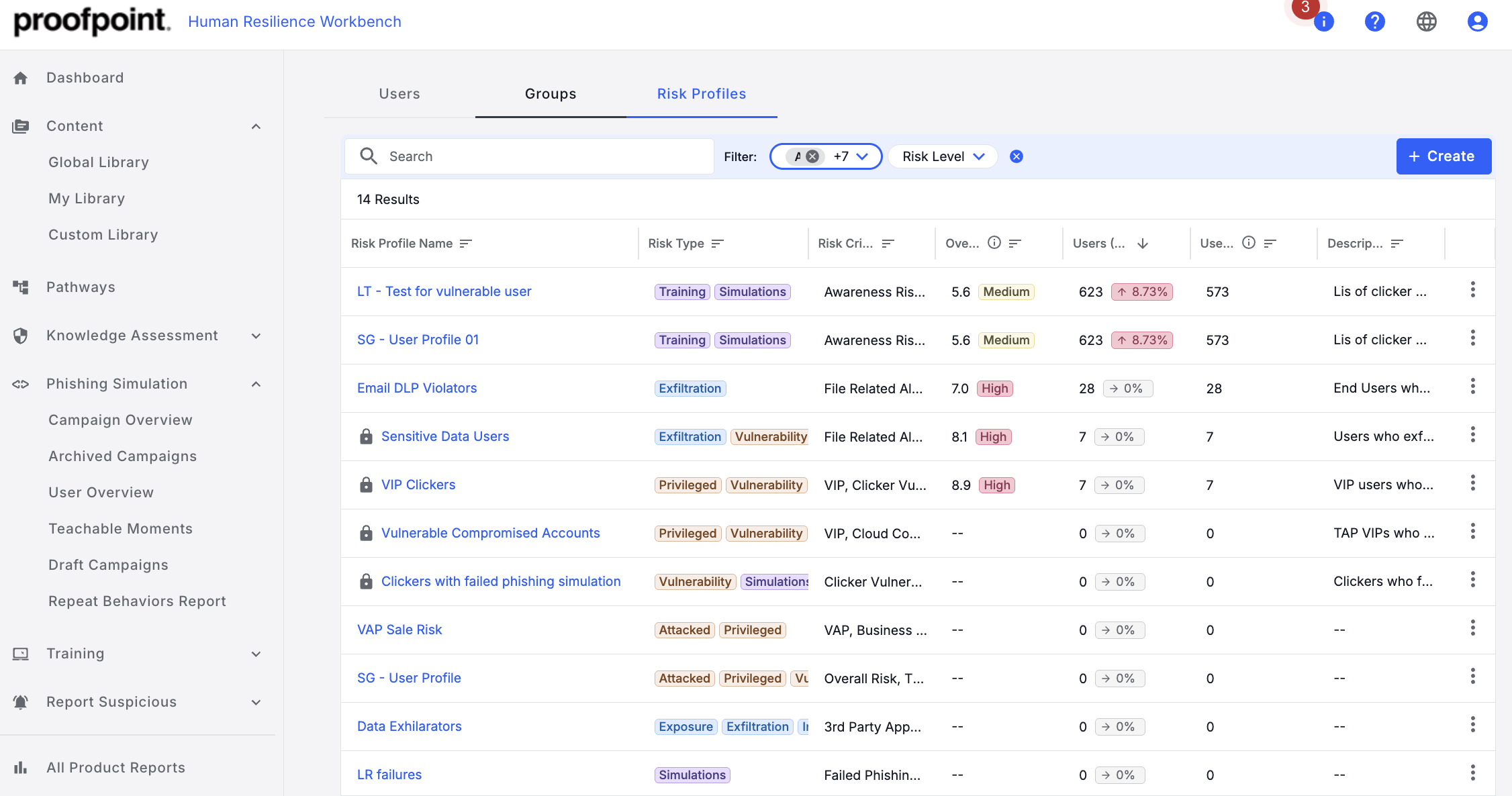
Figure 2. HRW dashboard provides organization wide visibility into human risk.
Why This Matters
Each risk profile includes predefined response pathways, helping teams apply the right mitigation strategies quickly. HRW also automatically creates adaptive groups, so the right users can be targeted without manual effort.
- Immediate actionable insights. Predefined response pathways enable teams to quickly apply the right intervention strategies.
- No manual segmentation required. Adaptive groups are created automatically, ensuring the right users are targeted without additional effort.
- Faster time-to-value. Eliminate setup complexity with pre-integrated risk signals, enabling teams to identify risk and take immediate action from the start.
- Execution at scale. Standardized profiles ensure consistent alignment between risk logic and response, reducing fragmentation and improving program effectiveness.
This leads to faster operations, more consistent execution, and less time spent interpreting data. Instead, teams can focus on what matters most: reducing risk.
How It Works
HRW continuously analyzes signals across user behavior, training engagement, and real-world threat exposure to generate a dynamic risk score for every user. It then identifies high-risk users, prioritizes action, triggers targeted responses, and measures the impact over time. Because these signals are pre-integrated and continuously updated, risk scoring is always current without requiring manual data aggregation or maintenance.
This closed-loop approach allows organizations to operationalize human risk management rather than simply observe it.
Built for Measurable Outcomes
Security leaders are increasingly asked to answer difficult questions about risk reduction and investment priorities. HRW provides clear answers through quantifiable scoring, continuous measurement, and defensible reporting.
By using a consistent, standardized risk model across the organization, HRW ensures that progress can be measured and communicated with confidence. It turns human risk from a vague concept into a structured, measurable security discipline.
Why Choose Human Resilience Workbench?
Human risk is constantly evolving, and it requires a dynamic approach. To protect against AI-scaled cross-channel attacks, you need both strong technologies and human resilience. Proofpoint’s integrated platform enables you to continuously understand, act on, and reduce risk. You don’t just get more data. You get pre-integrated, actionable insights that reduce complexity, accelerates time-to-value, and enables consistent measurable risk reduction.
Human Resilience Workbench is available within Collaboration Security Prime. To learn more, check our Proofpoint Collaboration Security Prime page.
Contact your Proofpoint account team to learn how it can help you to reduce human risk faster and with greater confidence.