
It has never been more challenging to build and maintain a security awareness program. Not only are security teams expected to reach a global, diverse workforce with limited time, skills, and resources—but they’re also supposed to prove that the program makes a measurable impact.
While it’s one hurdle to scale a program, it’s another to elevate it into something meaningful that helps shape employee behavior and reduce risk. To achieve both, organizations need an approach that adapts automatically to user behavior and real-world threats. At the same time, leaders need to have clear visibility into their progress. That’s where adaptive learning comes in.
Why traditional training falls short
Most awareness programs treat every employee the same. A finance executive with privileged access gets the same training as a junior marketing hire. Segmentation, if it happens at all, is a manual process that drains time and energy from security teams that are already stretched thin.
Generic, one-size-fits-all training is too rigid to keep up with new threats. What’s more, it’s too neutral to change behavior. And without automation, it’s nearly impossible to deliver the right learning experience to those most at-risk—and do so, at scale. The result is predictable: employees tune out, admins get bogged down, and organizations see little reduction in risk at scale. The result is predictable: employees tune out, admins get bogged down, and organizations see little reduction in risk.
The answer to these challenges isn’t more of the same—it’s adaptive learning.
Introducing Adaptive Groups and Adaptive Pathways
Adaptive learning is an approach that delivers targeted, risk-based education tailored to each employee’s behavior, role, and risk profile.
Proofpoint ZenGuide makes this possible through two connected capabilities: Adaptive Groups and Adaptive Pathways. Together, they replace one-size-fits-all programs with adaptive, contextualized learning experiences that ensure assigned activities—such as trainings, phish tests, and notifications—are relevant, impactful, and effective at driving positive behavior change.
Adaptive Groups: smart and automated targeting
Many awareness platforms group users mainly by training completion and failure or click rate of simulations. While that offers some insight, it misses broader signals of actual risk and leaves admins doing extra work to keep programs relevant.
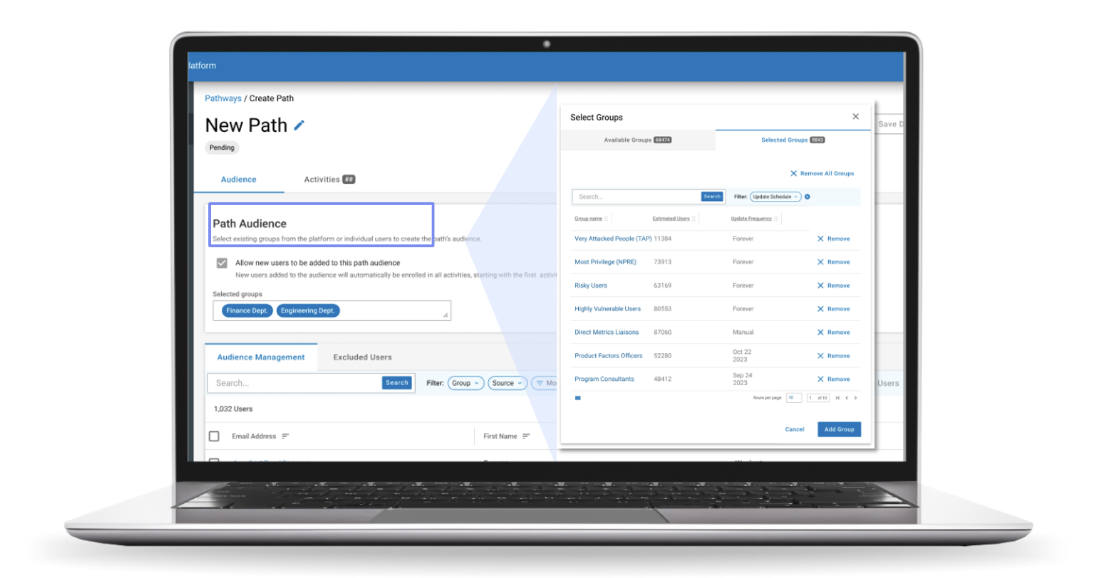
Figure 1. Adaptive Groups: Automated intervention for your high-risk users
Adaptive Groups are based on dynamic risk profiles that include user risk signals, behaviors, and roles. If someone has clicked a malicious link, for example, they’re placed into a group that receives tailored training designed to address that specific behavior. Unlike basic segmentation, Adaptive Groups also pull in risk signals from real-time threat, identity, awareness, and DLP indicators, like mishandling sensitive data. This ensures interventions are proactive, personal, and aligned with the threats that users face.
Key benefits include:
- Less manual work. No more building and updating lists manually.
- Always current. Groups remain dynamic as user risks change.
- Personalized focus. Training adapts to user needs, and effort is directed to where it has the most impact.
This allows teams to spend less time on targeting and managing groups and more time on helping employees build safer habits.
Adaptive Pathways: automated, personalized learning journeys
Traditional security awareness training programs often stall because they’re too manual. Admins are constantly required to make decisions about whom to target, with what training and when. Adaptive Pathways automate the creation and delivery of learning experiences based on real-world risk signals.
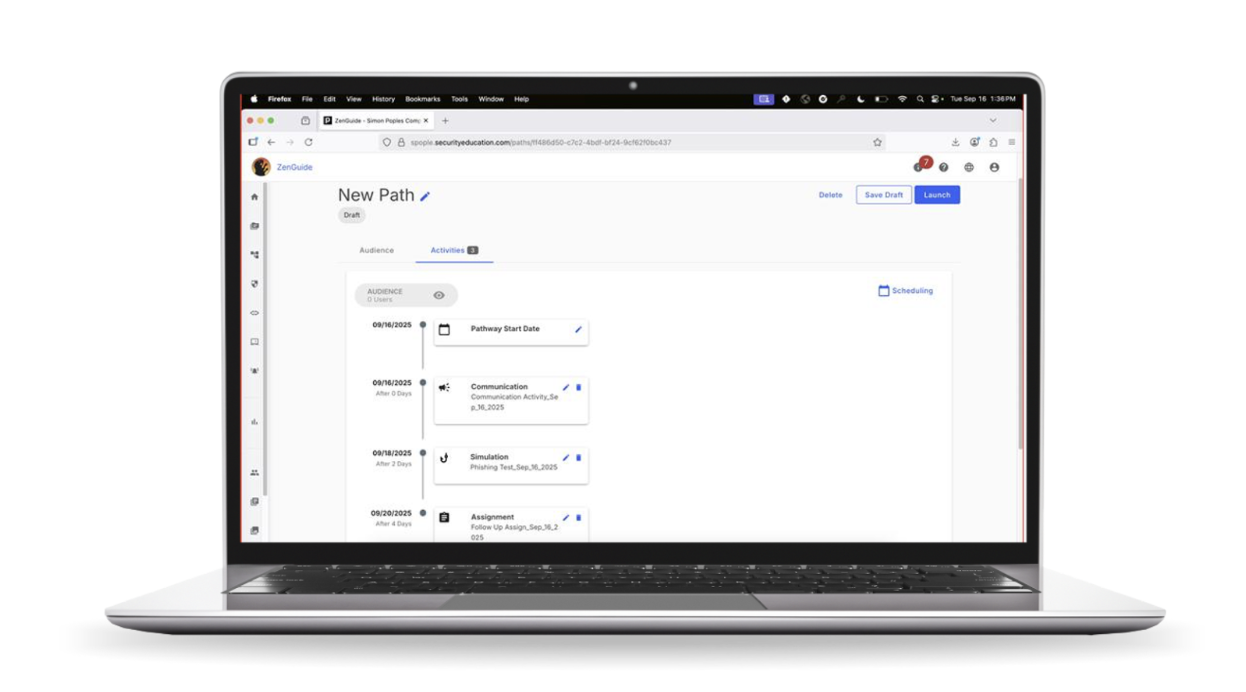
Figure 2. Adaptive Pathways: Automate creation and delivery of personalized learning journeys for at-risk users
The use of Adaptive Groups and Adaptive Pathways takes the guesswork out of program delivery. For example, let’s say an admin creates a group for finance team members who have triggered two DLP alerts or Top Clickers within your organization. Those groups will then be automatically enrolled into a tailored set of activities—microlearning, simulations, nudges—that are designed to address the risks associated with their specific behaviors.
As users’ risk profiles change, enrollment happens dynamically. This ensures learning paths remain timely and relevant. Admins can also monitor progress and outcomes through built-in reporting, making it easier to measure impact and refine programs as needed.
Key benefits include:
- Contextual and meaningful. Learning activities adapt based on behaviors, threat interactions, or compliance requirements. Employees see content that matters to them.
- Dynamic and seamless. Groups continuously update as user risks change, feeding directly into Adaptive Pathways for automated targeting.
- Simple to manage. The interface makes it easy to build and refine learning paths, keeping programs aligned to evolving threats across global teams.
By combining automation with admin control, Adaptive Pathways make it easier to create personalized, relevant, and impactful learning that drives real-world behavior change—without drowning in logistics.
How automated, risk-based learning drives lasting behavior change
The real power of adaptive learning isn’t just in efficiency—it’s in impact. By targeting experiences to common user risk profiles, through using Adaptive Groups and Pathways, the learning experience is more relevant, engaging, and effective. Employees are more likely to retain what they learn because it connects directly to their role and challenges.
Reinforcement happens over time. Repetition and contextual examples help safe practices resonate with employees and empower them. As risk signals shift, the learning experience adapts to stay aligned—without requiring constant admin oversight. Busy employees don’t have their time wasted preparing for unlikely or well-understood threats. Instead, the focus is on those who need the most support—and they have support exactly when they need it.
The result is more than awareness. It’s steady, measurable behavior change that strengthens resilience across the workforce.
Scale your program and elevate your human risk strategy
Driving behavior change is not a once-a-year exercise. It should be a continuous, adaptive process that personalizes learning to your people and their risks. Adaptive Groups and Adaptive Pathways within ZenGuide help you adopt best practices without adding more work to your team.
To learn more about driving real behavior change, check out ZenGuide, a key component to Proofpoint Prime Threat Protection. Prime helps organizations strengthen resilience and mitigate risk against human-centric, multichannel, multistage attacks.