
As the volume and complexity of digital interactions continue to grow, resilience has become a non-negotiable foundation for innovation. Today, Proofpoint analyses 1.3 trillion messages annually. With the advent of the agentic workspace, this number is only accelerating. The agentic workspace is generating new collaboration and messages at an unprecedented speed and scale. And this is placing even greater demands on the platforms securing these interactions.
Meeting this challenge requires a reliable and resilient foundation. Innovation and resilience aren’t opposing forces—they’re interdependent. By grounding our advancements in resilient architecture, we’re helping customers unlock new possibilities.
Resilience starts with reliability
At Proofpoint, we engineer for high availability from the ground up. Our platform is built on a multiregional and multicloud service provider architecture that’s designed to withstand localised disruptions and maintain service continuity. We’ve implemented automated failover strategies to ensure critical services remain operational, even in the face of infrastructure failures or regional outages.
This isn’t optional; it’s expected. In a world where collaboration is constant and threats are real-time, reliability is the baseline. Our customers depend on us to be there. That’s why we treat reliability as a fundamental design principle.
Resilience is a continuous process
Resilience isn’t a single system or process; it’s a mindset of continuous improvement across the entire service lifecycle.
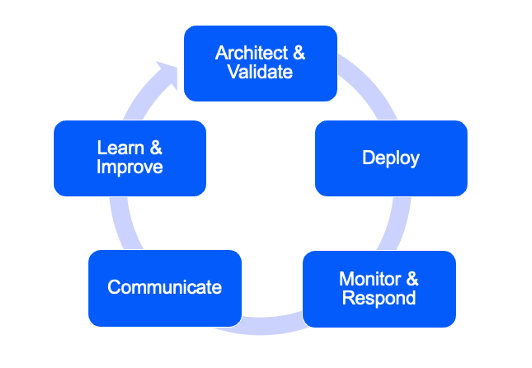
Figure 1. Resilience comes from continuous improvement across the service lifecycle.
At Proofpoint, we’re continuously evolving how we build, test and operate our platform to ensure our services are not only innovative but can also scale reliably and recover quickly.
Here’s a glimpse of how we’re doing it:
- Architecture and testing. We’re improving test coverage through automation. We’re also incorporating insights from past incidents. Post-mortems now go beyond root cause analysis to identify broader corrective actions that strengthen the service overall.
- Deployment practices. To avoid ‘go fever’, we’re using AI to assess deployment risk. It evaluates change history, service dependencies and scope to provide a neutral view, helping us to make smarter go/no-go decisions.
- Monitoring and observability. We already track hundreds of service health parameters, but we’re consolidating monitoring systems into a common observability platform. This improves visibility across services and enables earlier detection of anomalies, even before predefined thresholds are crossed.
- Customer communication. We’re evolving how we notify customers about upcoming changes. Instead of waiting for confirmed impact, we’ll proactively alert you when there’s a higher potential for disruption, giving you more time to prepare.
- Learning and improving. To ensure we’re holding ourselves to the highest standards, we’ve engaged a third-party auditor to review our development and deployment practices. This external perspective helps us identify blind spots and speed up improvements.
Resilience powers the future
Resilience isn’t just about avoiding disruptions. It’s what enables us to move fast without breaking your trust. It’s what allows us to innovate and scale with confidence, knowing that our platform can adapt, recover and keep delivering—even as demands grow exponentially.
As agentic AI reshapes how work gets done, the platform securing the collaboration between people and agents must be more reliable, more transparent and more responsive than ever before. That’s why we’re continuing to invest in resilience—not just to prevent disruption, but to unlock the next era of innovation and scale for our customers.
Read more about Proofpoint’s industry-first innovations to protect the agentic workspace.