
Part 4 of 4: From Signals to Significance with an Agentic AI platform
Imagine starting your morning with 856 individual signals waiting for review.
You already know what happens next. Most will be legitimate business activity and wasted efforts. A handful may matter to a degree. And buried somewhere in that volume could be the one sequence of behaviors that changes the entire investigation—and this is what you needed to know about within the first 30 minutes of your day.
The challenge isn’t seeing more. Insider risk analysts need the breadth and depth for investigations. It’s knowing what deserves your attention first.
That is where an agentic approach begins to change the experience.
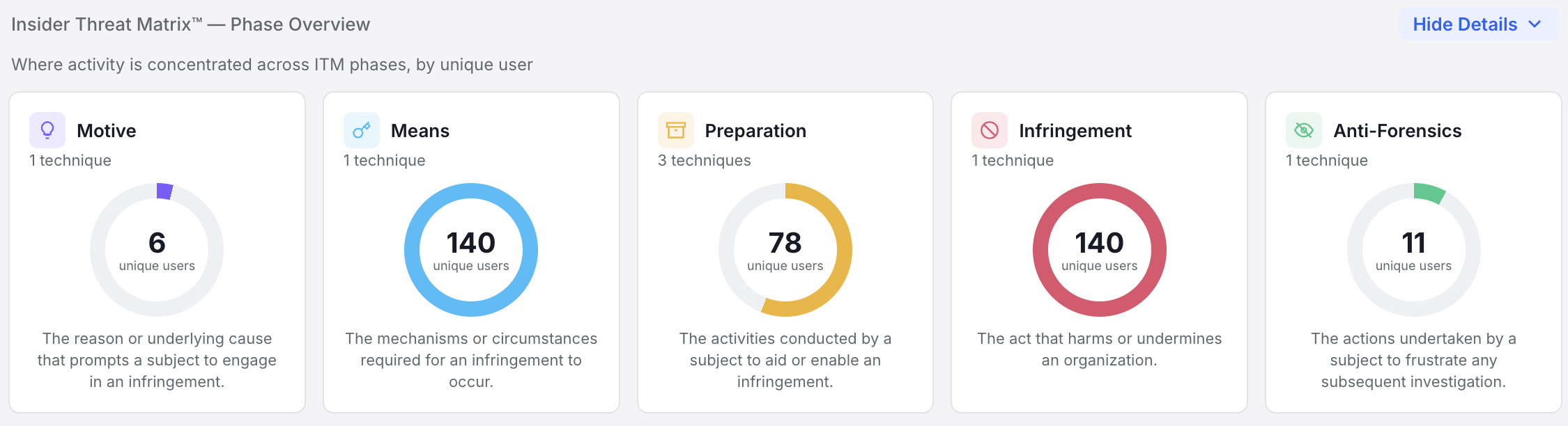
Instead of asking an analyst to start with a queue and manually connect the dots, AI can continuously evaluate risk across signals, behaviors, and context—helping surface the people, activity, and emerging patterns that warrant attention first. Not simply because an alert fired, but because multiple pieces of context, viewed together, tell a more meaningful story.
Think of it as moving from “Here is everything that happened” to “Here is what matters, why it matters, and where you should start.”
From there, the platform can help carry that intelligence forward. It can correlate seemingly disconnected activity, surface relevant context, support investigation workflows, recommend or orchestrate next steps, and help apply adaptive controls as risk changes.
The analyst remains central. AI isn’t making the investigation less human; it is removing more of the work required to get to the human judgment that matters.
That distinction is important.
The promise of an agentic insider risk platform isn’t simply more AI.
It’s giving practitioners a clearer answer to the question they face every morning:
What do I need to look at first—and what should I do about it?
Where Agentic AI Flips the Equation
Here's the turn: the same technology creating this new risk surface is also one of the few things capable of flipping a program from reactive to proactive at scale.
The next generation of insider risk detection doesn't replace the analyst. It extends them, and it moves their attention upstream, away from cleanup and toward early warning. It correlates fragmented signals into coherent stories, recognizes when a sequence of ordinary actions maps to a known attack pattern, and catches behavioral drift before risk escalates, across every user, every day, without the burnout that has quietly hollowed out traditional insider risk programs for years.
And there's an earlier signal hiding in plain sight, one that reactive tools were never designed to look for: purpose shows up in language long before it shows up in file movement. By reading tone and sentiment across enterprise collaboration tools, agentic systems can surface disengagement, grievance, or a planned departure weeks or months before a single suspicious download occurs. That gap, weeks of warning instead of zero, is the difference between a program that finds out after the damage is done and one that intervenes while there is still something to prevent.
The Risk Chain: From Alert to Story
The mechanism that makes proactive detection possible is the risk chain, and it's the real innovation underneath everything above.
Reactive systems score events in isolation: a download here, a new-device login there, a sentiment shift in a Slack message somewhere else, each one judged only after it happens. A risk chain refuses to look at any of them alone and refuses to wait for the last event to arrive before saying something. It links related signals across time, systems, and actors into a single narrative as it forms: motive, access, preparation, activity, and outcome, assembled the way a human investigator would if they had unlimited time and could start watching from week one.
A risk chain doesn't report "this user downloaded a large file" after the download already happened. It reports, while the pattern is still assembling: this user, showing signs of disengagement over the past six weeks, escalated their access to a repository outside their team, then downloaded and shared it externally within 48 hours of their resignation date.
That's not an alert. That's a case file, and increasingly, it's a case file an analyst can read before the final, most damaging step ever takes place. That is the difference between a small team drowning in low-priority tickets after the fact and a small team acting with the confidence of an investigator who saw this coming.
Putting the Story in Front of the Analyst, Before It's Too Late
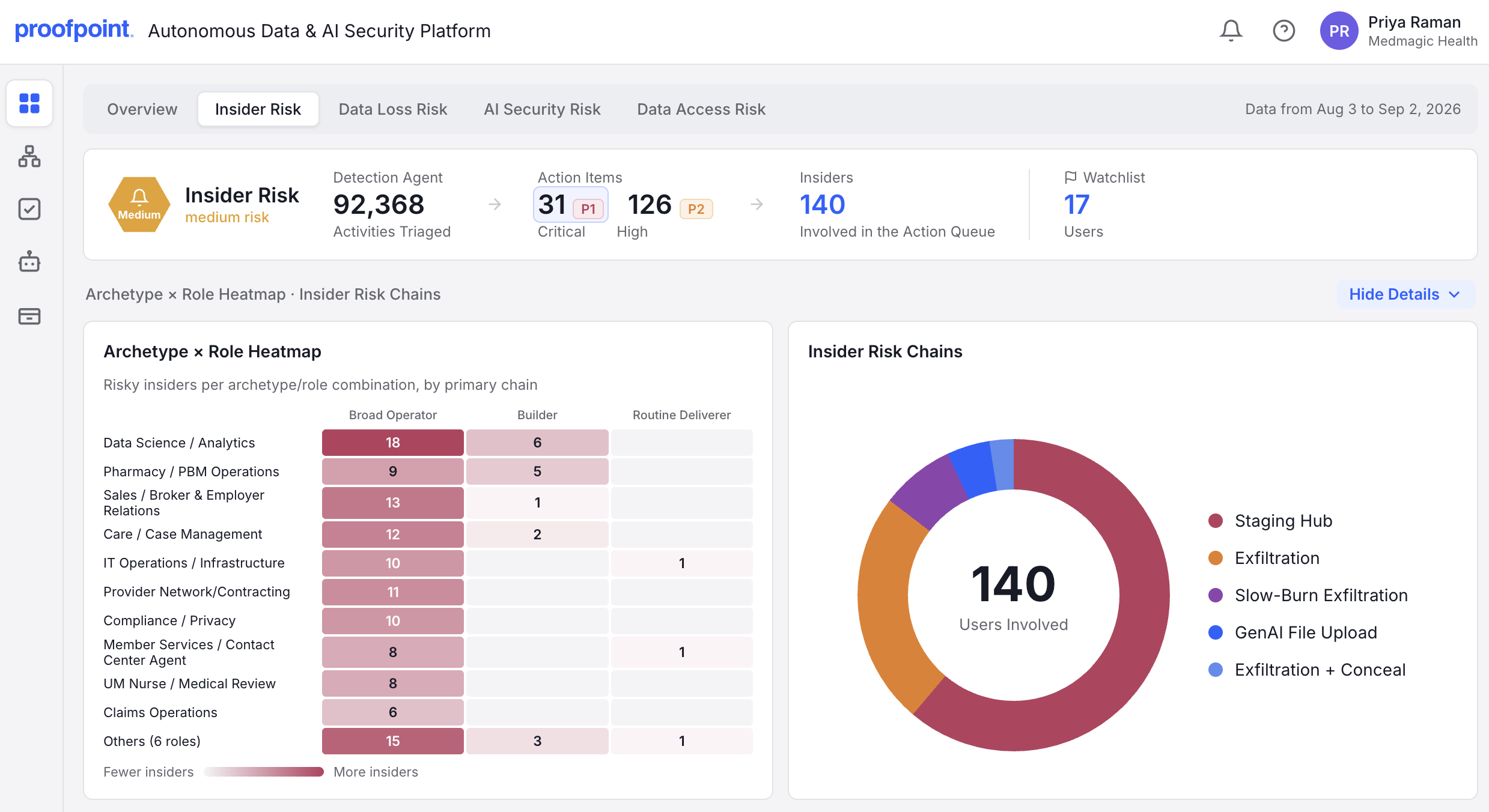
Risk chains need somewhere to land, which is why they feed directly into an insider risk briefing built for a proactive workflow, not the reactive one analysts are stuck with today. Instead of a queue of disconnected DLP alerts that only make sense after something has already gone wrong, the briefing surfaces a ranked list of the organization's riskiest users, ranked by the severity and number of risk chains actively forming behind them, not by raw event volume.
For each user on that list, the briefing hands the analyst everything needed to make a call in minutes, ideally while there is still time to change the outcome:
- A plain-language summary: what happened, across which systems, over what time period, written as a narrative instead of a log dump.
- A confidence verdict: how closely this chain matches known insider or agentic risk patterns versus a benign explanation.
- Suggested next steps: the specific containment or investigation action the situation calls for, whether that's restricting access, looping in HR or legal, or simply watching for further drift, before it escalates into something reactive teams would only see after the fact.
An analyst opens the briefing already knowing who to look at first, why they're on the list, how seriously to take it, and what to do next, days or weeks earlier than a purely reactive queue would have surfaced the same person. Hours of manual correlation collapse into one screen, and hindsight gets replaced with lead time.
What This Changes for Customers
This is the combination customers have been asking for: fewer alerts, richer stories, earlier warning, and a program that finally moves ahead of the incident instead of cleaning up after it. Instead of an insider risk program that scales linearly with headcount and telemetry volume, always one step behind, agentic AI lets a small team cover ground that once required a much larger one and cover it early enough to matter. It compresses containment time, the single biggest cost lever according to Ponemon Institute’s 2026 Global Cost of Insider Risks report, and it shifts the entire posture of the program from reactive triage to proactive intervention.
Insider risk isn't going away. Agentic AI hasn't created a separate threat surface. It's added a new actor to the same one and raised the cost of staying reactive along with it. But the organizations that treat activity chain analysis, archetype drift detection, and communication sentiment as a single connected discipline, and that put the resulting story in front of analysts while there is still time to act on it, will be the ones who stop the next incident before it ever becomes a line item in next year's Ponemon report. That is what proactive looks like in practice: not a faster reaction, but no reaction needed at all.