
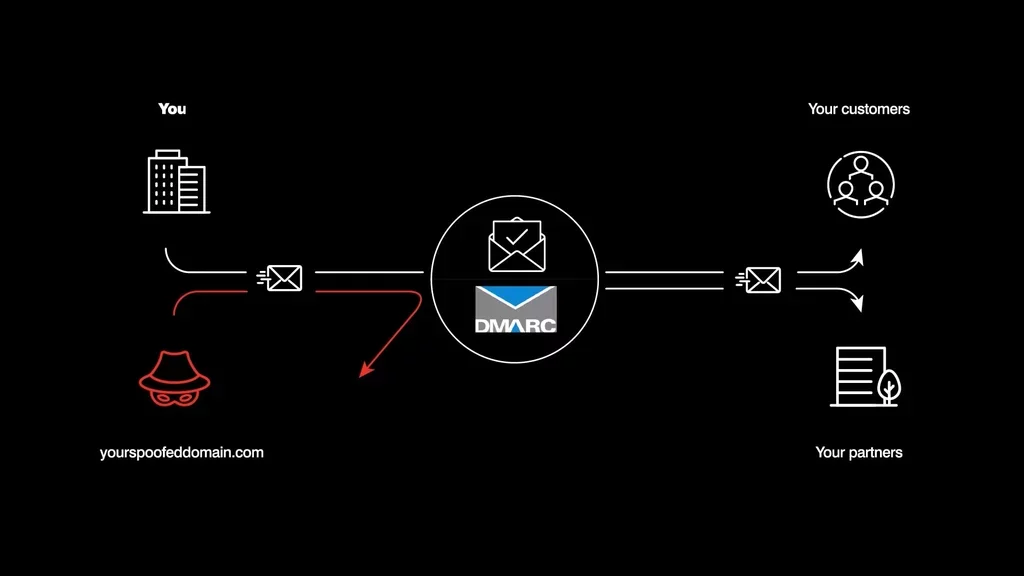
Email Authentication

DMARC Solutions for Email Authentication and Fraud Defense

Protect your domains, improve deliverability, and stop email fraud. Discover email senders, fix failed authentication, and enforce DMARC without disrupting legitimate mail.

Business professional checks her smartphone while carrying a laptop outside an office building.

DMARC SOLUTIONS

Protect your domains across every sending source

DMARC solutions help domain owners identify every service sending email on their behalf, authenticate legitimate messages, and enforce policy without disrupting critical mail flow. 

The most effective DMARC solutions give security teams visibility into SPF, DKIM, and DMARC alignment across internal systems, cloud services, ESPs, and third-party senders. With that visibility, teams can identify failed authentication, validate DKIM signatures, reduce spoofing and business email compromise (BEC), and prepare for DMARC enforcement with fewer surprises. 

Discover every sender

Prevent hidden senders from delaying DMARC deployment by identifying every service that sends email using your domains. 

Enforce policy safely

Enforce DMARC with greater confidence by identifying failed authentication before legitimate email is disrupted.

Enable brand protection

Protect trusted domains from spoofing and lookalikes.

01 04

DMARC ENFORCEMENT

Complex email ecosystems make DMARC enforcement difficult 

Publishing a DMARC record is the easy part. The challenge is identifying every source that sends email using your domains, aligning SPF and DKIM, and enforcing policy without disrupting legitimate email messages.

New sender requirements have made it critical to implement DMARC across high-volume outbound, transactional, and third-party email. As your email environment grows more complex, you need more than DMARC reporting alone. Effective DMARC solutions support safe enforcement, long-term visibility into email authentication methods, and better control over sender activity.

DMARC MONITORING

Gain visibility before enforcing DMARC 

Proofpoint Email Fraud Defense helps teams identify legitimate senders, understand authentication gaps, and prepare for DMARC enforcement without disrupting legitimate email messages. It gives domain owners a clearer view of how email is sent, where failed authentication occurs, and what to remediate before enforcing quarantine or reject policies. That turns DMARC deployment into a managed process supported by highly skilled Proofpoint consultants providing guidance. 

01 04

Sender Discovery

Identify internal systems, cloud applications, and third-party services sending email using your domains. 

DMARC Monitoring

See which email passes or fails DMARC so teams can prioritize the right fixes first.

SPF and DKIM Alignment

Find authentication gaps across complex mail flows and reduce the effort needed to remediate them.

Guided Policy Rollout

Move from p=none to quarantine and reject with better visibility and fewer surprises for legitimate mail.

Hosted Authentication Services

Increase security and simplify management through hosted SPF, DKIM, DMARC and BIMI services.

Continuous Optimization

Boost efficiency with AI-guided misconfiguration detection and step-by-step remediation.

TRANSACTIONAL EMAIL SECURITY

Protect transactional and third-party email

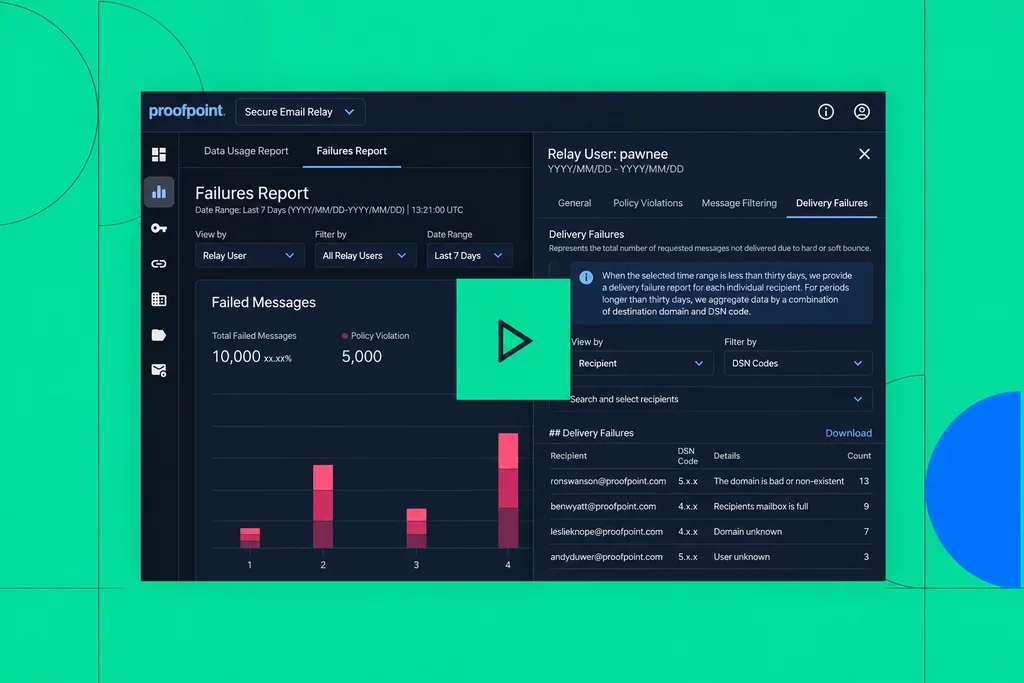
Proofpoint Secure Email Relay helps secure machine- and AI agent-generated email as well as manage messages sent by SaaS platforms and other third-party senders on your behalf. By separating user email from transactional email, validating approved sources, and applying DKIM signatures to outbound messages, it helps support DMARC enforcement without disrupting critical business communications. 

Centralized Relay Control 

Route application email through one managed service instead of fragmented relays and point connections. 

Approved Source Validation

Allow only approved systems and third-party senders to send email using your domains.

DKIM Signing

Apply DKIM signatures to transactional email before delivery to support DMARC enforcement.

Application Mail Separation

Separate user email from application-generated email so teams can secure and manage each flow appropriately.

Third-Party Sender Control

Regain visibility into vendors, ESPs, and SaaS providers that affect your domain reputation.

Optional Security Controls

Apply encryption and DLP controls to sensitive application email that requires additional protection.

01 04

WHY PROOFPOINT

Proofpoint DMARC solutions vs. reporting-focused DMARC tools

CapabilityReporting-focused DMARC ToolsProofpoint DMARC Solutions 
Sender discovery Focus on DMARC reports instead of comprehensive discovery of authorized sending sources Identify internal systems, cloud services, SaaS platforms, and third-party senders using your domains
Authentication remediation Identify authentication failures but provide limited remediation guidance Identify SPF, DKIM, and DMARC alignment gaps and help prioritize remediation
DMARC enforcement Provide policy visibility while leaving validation and rollout to internal teams Support a controlled path from monitoring to quarantine and reject with greater confidence
Transactional email protection Provide limited support for securing and governing transactional and application email Secure application and transactional email with DKIM signing, sender validation, and centralized relay management
Ongoing governance Focus on reporting rather than continuous governance and optimization Continuously monitor sender activity, detect configuration drift, and help maintain DMARC health

GETTING STARTED WITH DMARC

Request a Demo

Discover senders, fix authentication gaps, and move toward DMARC enforcement with confidence 

Frequently Asked Questions

Domain-based Message Authentication, Reporting, and Conformance (DMARC) is an email authentication protocol that helps domain owners prevent spoofing and unauthorized email use. DMARC works with Sender Policy Framework (SPF) and DomainKeys Identified Mail (DKIM) to help receiving mail servers verify whether a message is legitimate before it reaches an inbox or spam folder.

Set up DMARC safely by starting with a p=none monitoring policy, identifying all legitimate senders, and fixing SPF and DKIM alignment before moving gradually to quarantine and then p=reject. Proofpoint Email Fraud Defense helps discover sending sources, identify authentication gaps, and guide DMARC deployment so you can enforce policies without disrupting legitimate email.

SPF verifies which servers can send email using your domain. DKIM adds a digital signature that helps validate messages. DMARC builds on both methods by telling receiving mail servers how to handle email that fails authentication checks.

Yes. DMARC can help protect password resets, invoices, notifications, and other transactional email messages sent by internal systems or third-party providers. To enforce DMARC safely, organizations need visibility into every approved sender and support for DKIM signing across application and SaaS email flows.

When an email fails DMARC authentication, receiving mail servers can monitor, quarantine, or reject the message based on the domain owner's policy. Failed authentication can also prevent legitimate email from reaching the inbox if SPF and DKIM are not aligned correctly.

Look for a DMARC solution that helps you discover all email senders using your domains, identify authentication gaps, support SPF and DKIM alignment, and enforce policy without disrupting legitimate email. Strong DMARC email security solutions also help manage transactional email and third-party senders over time.