
Why You Need Unified SEG + API Protection for AI Threats
When attacks execute at machine speed, speed becomes your primary defense.
This blog explains why integrated SEG + API protection architecture matters more today, and addresses the specific claims being used to argue otherwise. It also looks at how Proofpoint API-based protection can complement Microsoft, using Microsoft’s own data as part of the evidence.
The urgency for continuous, integrated protection is made visible in two stark pictures from Proofpoint’s threat & evaluation data:
-
Proofpoint Threat Research recently observed an M365 password spraying campaign targeting 80k mailboxes across 3k tenants, in which pivots to the M365 admin portal completed in 2-4 seconds. A feat for any human. Not for scripting or for AI, and certainly not for a combination of the two.
-
Microsoft Defender for Office 365 missed 408 email threats per 1,000 users per month on average across thousands of comparative evaluations2 .
Organizations shifting these risks right, to the user, while introducing operational overhead by managing separate controls, are fighting machine-speed threats at a disadvantage, especially considering its impact on threat volume. Proofpoint’s threat data shows email threats grew 94% year over year, from 2.8 billion in 2024 to 5.4 billion in 2025, and novel campaigns, including business email compromise (BEC), increased 27% in that same window.
The claim that pre-delivery security is now commoditized
The argument goes like this: Microsoft moved several E5 detection capabilities into E3, the gap between tiers narrowed, and therefore the gap between Microsoft and everyone else narrowed too. That conclusion does not follow from Proofpoint’s data which shows 408 MDO misses per 1,000 users/month that Proofpoint stops. And while its own self-run benchmarking misses the point (MDO is blind to what Proofpoint stops ahead of it), the report showed evidence that is contrary to commoditization claims [2,000+ missed email range among all vendors in the same time period].
Persistent differences in miss rates between platforms are not evidence of commoditization. They are evidence that pre-delivery AI detection is still doing real, differentiated work. A well-built pre-delivery layer can cut risk exposure from email dwell time by 72X and deliver 99.999% detection efficacy. Those aren’t results customers regularly achieve with native controls, even when “gifted” Defender for Office Plan 1 to the tune of a 13% price increase from Microsoft.
Machine speed matters most before the click
The second claim usually follows the first: what matters most is a model that learns your organization’s communication patterns and catches novel social engineering after the message lands, at machine speed. That framing misses an important point. Machine-speed protection should operate before and after delivery, not compensate for removing a pre-delivery control. It is the standard pre-delivery detection has to meet, and a modern SEG is built to meet it.
A modern, AI-SEG goes beyond static rules by applying language models, behavioral analysis, and image analysis to catch novel threats. It can make that call before the message reaches an inbox instead of after. That is the argument for machine speed: detection matters most at the point where it can still stop exposure from happening, not only after exposure has occurred. Proofpoint pre-delivery detection draws on 2.1 trillion emails scanned and 20.4 trillion URLs analyzed and is refined continuously across more than 1,000 attributes. It stopped 27% more novel threats than other email security providers, precisely because it is evaluating a message before a person ever sees it.
Post-delivery detection is genuinely useful for a different set of cases, such as internal phishing after an account has already been compromised or direct-send techniques that bypass normal mail routing entirely. Those scenarios never transit a gateway, so post-delivery becomes essential. That is a case for adding a connected second layer on top of a SEG, not for replacing the SEG with one. For external traffic that a gateway can inspect, preventing delivery reduces exposure compared with relying solely on post-delivery remediation. Speed after delivery can reduce dwell time, but it does not eliminate the exposure window.
For organizations building defense in depth, a reality that often goes unaddressed is the operational cost of multiple email quarantines and administrative workflows.
Gartner’s December 2025 Magic Quadrant for Email Security highlighted this gap
“As organizations consider an expanded email security stack, minimizing the total cost of ownership (TCO) of the combined tools and simplifying operations should remain priorities. Clients should emphasize these factors when evaluating secondary vendors, favoring stronger integrations and streamlined workflows, such as unified quarantine or automation capabilities, to reduce administrative overhead.”
2025 Gartner® Magic Quadrant™ for Email Security. Max Taggett, Nikul Patel, December 1, 2025
The architecture modern AI attacks actually demand
Attackers do not respect the line between before delivery and after delivery. A credential gets phished, that account gets used to send internal mail no gateway ever inspects, and a direct-send technique routes around normal filtering entirely. If your architecture treats pre-delivery and post-delivery as disconnected controls, you can end up managing separate consoles, separate tuning, and incidentally limit shared intelligence between the two layers that are supposed to support each other.
That is the case for unifying an AI-powered SEG with API-based protection into one architecture, rather than treating machine speed as something that only happens on one side of delivery. The SEG applies machine-speed AI to traffic before it reaches the inbox, where a block can prevent a click from happening at all. API-based protection extends Proofpoint’s detection intelligence into internal mail activity and mailbox behavior, places a gateway structurally cannot see. When threat intelligence moves in both directions—with post-delivery findings sharpening pre-delivery filtering and gateway detections enriching mailbox-level models, you get continuous protection across the email lifecycle and less operational friction during investigation and response.
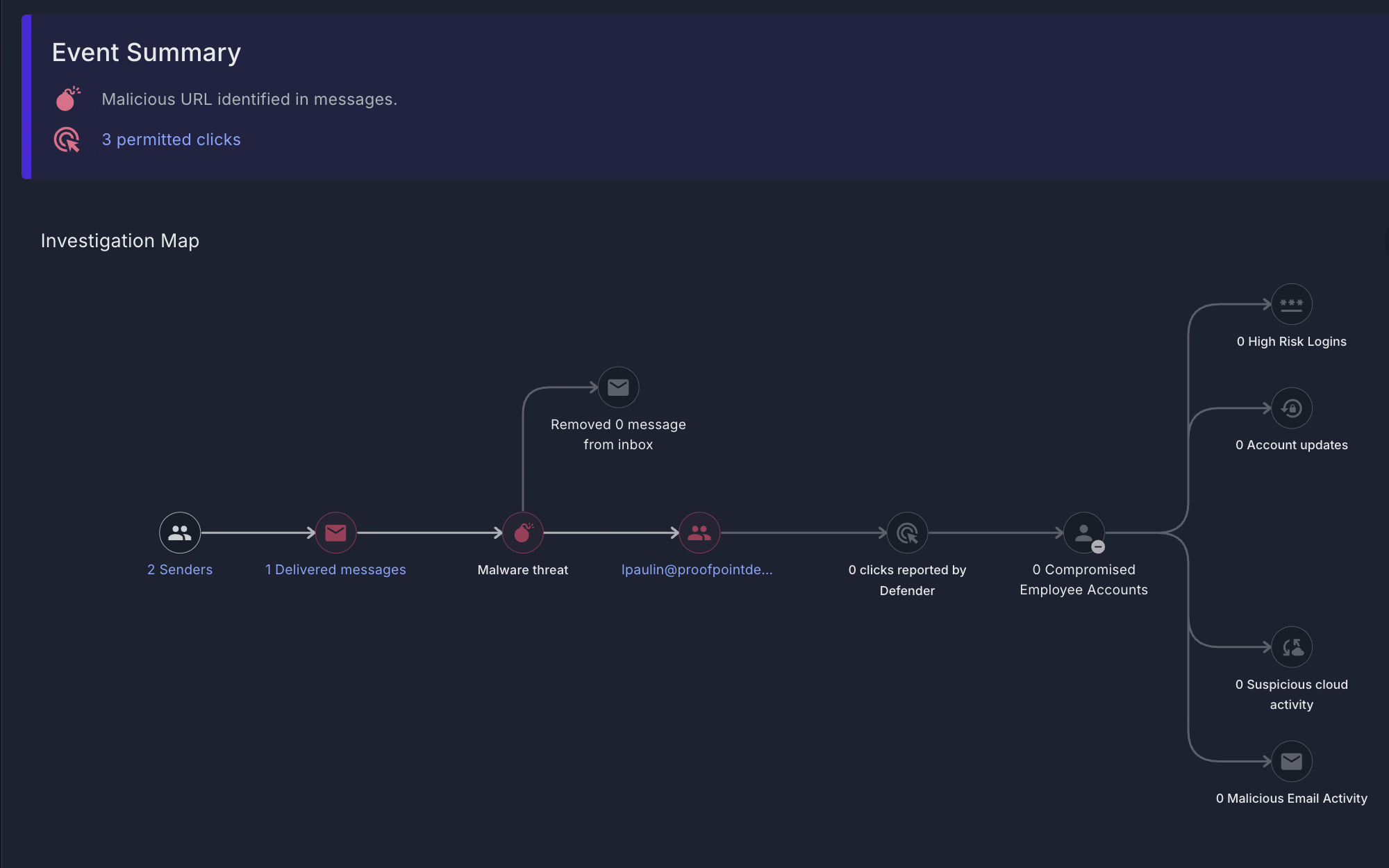
Proofpoint unifies visibility and automates response across the attack chain
Defense in depth was never supposed to mean fragmented operations. It means coordinated controls, shared visibility, a connected experience to investigate and respond, no matter where in the lifecycle a threat shows up. That is the real architecture question heading into future planning cycles: whether detection is stopping something before the click, detecting and responding to it afterward, not whether a SEG is outdated.
Two paths, and why speed and simplicity matter in both
Security teams also need something the industry conversation tends to skip: ease of use and speed of deployment, now more than ever. Teams are stretched thin, threats move faster, and long integration projects add operational burden. That reality shapes which path makes sense, and Microsoft’s data can help inform the case for a complementary layer.
Microsoft E3/E5 with Proofpoint’s Core Email Protection API
This is where the case for Proofpoint API-based protection is most direct, and it is worth being specific about what it actually delivers. Adding a Proofpoint API layer on top of Defender is not just a second post-delivery scan running alongside Microsoft. It connects your mailboxes to Proofpoint’s threat intelligence generated across a broader detection environment, including pre-delivery protection. That intelligence informs the API layer protecting Microsoft mailboxes even without deploying a gateway yourself, with a deployment model designed for speed and simplicity.
You also get native integration into the Microsoft ecosystem, including Defender XDR, Sentinel, Entra, and the workflows security teams already use. The approach works alongside Microsoft telemetry. The API layer itself remains a post-delivery control, but it can benefit from intelligence generated across the broader Proofpoint detection environment.
Per Microsoft’s benchmarking, Proofpoint’s API caught 6.57% of the post-delivery malicious mail Defender missed, 2.7X more than the 2.45% caught by Abnormal.
Proofpoint’s Unified SEG and API Architecture
For organizations that want a unified approach across pre-delivery and post-delivery protection, this model brings the controls together. One vendor, one system operating across pre-delivery and post-delivery, first-seen intelligence shared in both directions, and a single experience for investigation and response instead of disconnected workflows.
A unified model can also reduce the operational overhead of managing separate controls while allowing organizations to apply protection before delivery, after delivery, or both.
Both paths can add a complementary layer to a Microsoft deployment, but the evidence should be matched carefully to each architecture. Microsoft’s benchmarking shows persistent differences in pre-delivery performance and measurable contributions from post-delivery security layers.
The question was never SEG versus API, or Microsoft versus everyone else. It is whether detection is stopping threats before delivery, after delivery, or both, and doing it with the speed and simplicity security teams need. That includes unifying common email investigation and response next steps like stopping email exfiltration, identifying and taking down domain fraud, and detecting threats across messaging and web channels.
The case for layering should rest on measurable outcomes: Microsoft benchmarking, Proofpoint telemetry, and independent analyst guidance.
Learn more about Proofpoint’s complete, continuous protection against AI powered threats.
--
Disclaimer: Gartner does not endorse any vendor, product or service depicted in its research publications, and does not advise technology users to select only those vendors with the highest ratings or other designation. Gartner research publications consist of the opinions of Gartner’s research organization and should not be construed as statements of fact.
Gartner and Magic Quadrant are trademarks of Gartner, Inc. and/or its affiliates.