Top DSPM Vendors for Enterprise Data Security

What Is DSPM?

Data sprawl has become the silent threat lurking in every enterprise, and traditional security approaches simply cannot keep pace. Data Security Posture Management (DSPM) has become a critical solution for organizations drowning in unmanaged sensitive information across cloud services, SaaS platforms, databases, and file repositories.

The fact of the matter is, most security teams have lost track of where their critical data actually resides. The numbers tell a sobering story: 80% to 90% of enterprise data remains unstructured and unprotected, and the cost of a data breach (now averaging $4.45 million per incident) can cripple a company. The top DSPM companies provide essential protection to tackle these vulnerabilities head-on.

What Is DSPM?

Data Security Posture Management targets the fundamental problem of data visibility in modern enterprises. DSPM solutions automatically discover and classify sensitive information across your entire digital infrastructure. These tools give security teams the comprehensive view they desperately need.

Think of DSPM as your organization’s data GPS. It maps where sensitive information lives, tracks how it moves, and identifies potential security risks along the way. The core principle is straightforward: you cannot protect data you cannot see. Today’s leading DSPM vendors have built sophisticated platforms that combine automated discovery, risk assessment, and continuous monitoring to address this challenge.

DSPM Vendors

What Are the Best DSPM Solutions?

These industry-leading DSPM vendors outrank their competitors at safeguarding organizational data:

  • Proofpoint

    Proofpoint Data Security Posture Management (DSPM) discovers and classifies data across SaaS, PaaS, IaaS and on-premises environments to identify exposure risks and compliance violations.

    Proofpoint Data Security Posture Management (DSPM) discovers and classifies data across SaaS, PaaS, IaaS and on-premises environments to identify exposure risks and compliance violations. DSPM is designed through the same human-centric lens that powers its DLP and insider threat management solutions. It assigns monetary value to data, visualizes attack paths, and highlights over-permissioned access, enabling security teams to allocate resources effectively.

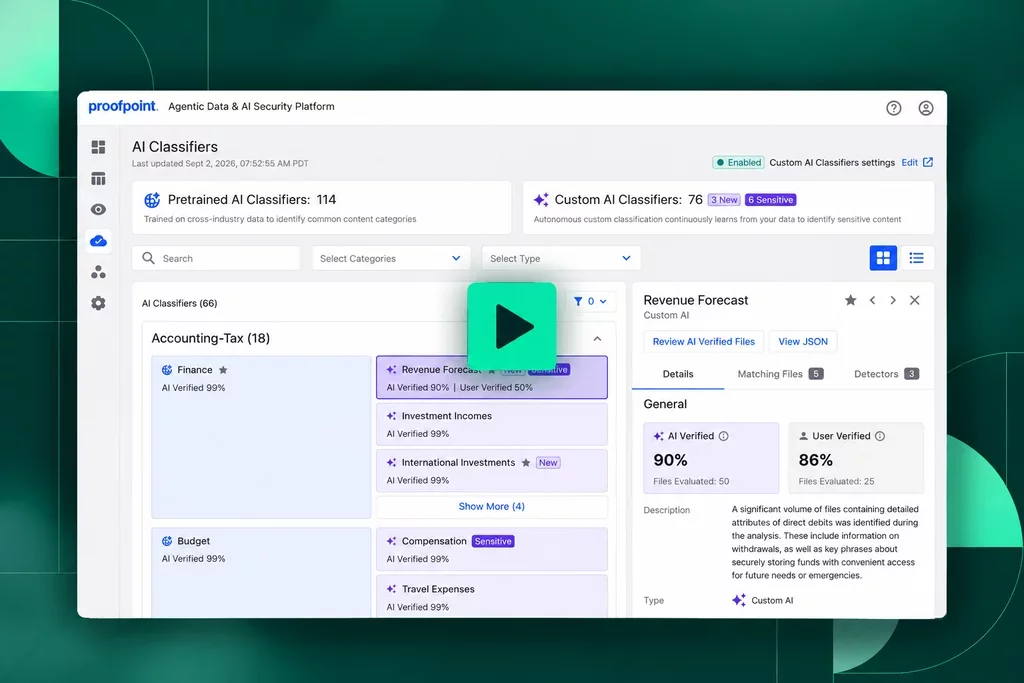
    Proofpoint DSPM’s autonomous custom classifiers continuously learn from enterprise data patterns to reduce false positives and improve precision when identifying sensitive information unique to each organization. Tight integration with Proofpoint Data Security unifies insights from email, endpoint, and cloud data channels. The integration enables automated policy enforcement, alert enrichment, and faster triage—allowing security teams to move from data discovery to risk remediation seamlessly.

  • Cyera

    Cyera offers an agentless, cloud-native platform that maps data across multi-cloud estates in minutes.

    Cyera offers an agentless, cloud-native platform that maps data across multi-cloud estates in minutes. Its DataDNA technology combines pattern matching with context from IAM and network policies to surface misconfigurations and shadow data. The product emphasizes automated remediation, pushing fixes through native cloud APIs when risky exposures appear. Cyera’s strength lies in speed and breadth. Large environments can be scanned continuously with little operational overhead. However, customers managing insider risk or email-borne threats will need additional tooling outside the Cyera stack.

  • BigID

    BigID takes a privacy-first approach, pairing DSPM capabilities with consent and data rights workflows.

    BigID takes a privacy-first approach, pairing DSPM capabilities with consent and data rights workflows. The platform excels at deep classification of structured and unstructured stores, including mainframes and data lakes. Visual “data maps” help stakeholders trace sensitive fields through complex pipelines, a feature praised in regulated industries. BigID recently added AI governance modules to track model training data, but remediation still leans on ticketing rather than automated policy enforcement. Organizations with heavy privacy mandates often shortlist BigID for its mature compliance toolset.

  • Securiti

    Securiti positions its platform as DSPM plus unified data governance.

    Securiti positions its platform as DSPM plus unified data governance. The vendor blends discovery, classification, and risk analytics with automated privacy request handling under one UI. Its strong API catalog integrates with popular SaaS, PaaS, and database services, giving broad coverage in hybrid deployments. A notable differentiator is “data ownership linking,” which pairs personal data with individuals to streamline subject-rights fulfillment. Security teams seeking a combined privacy-security play may see value, though some report steeper learning curves during rollout.

  • Varonis

    Varonis extends years of file-system monitoring expertise into cloud stores like AWS S3 and Microsoft 365.

    Varonis extends years of file-system monitoring expertise into cloud stores like AWS S3 and Microsoft 365. Its DSPM module analyzes access patterns to flag excessive permissions and lateral movement paths. Built-in forensics provides granular audit trails useful in post-incident reviews. Varonis excels in deep permission analytics, but its historical Windows heritage means initial setup can require collectors and agents, adding deployment effort compared to newer agentless rivals.

  • Microsoft Purview

    Purview embeds DSPM-style capabilities natively in Azure and Microsoft 365.

    Purview embeds DSPM-style capabilities natively in Azure and Microsoft 365. The solution automatically labels sensitive data, applies policy-based protections, and surfaces risk insights in the Purview compliance portal. Organizations invested in Microsoft stacks benefit from consolidated licensing and a familiar admin experience. Yet coverage outside Microsoft clouds is limited, so multicloud enterprises often supplement Purview with third-party DSPM for AWS, GCP, or niche SaaS visibility.

  • Sentra

    Sentra focuses on cloud data autonomy, prioritizing discovery and classification that runs entirely within customers’ VPCs to satisfy sovereignty concerns.

    Sentra focuses on cloud data autonomy, prioritizing discovery and classification that runs entirely within customers’ VPCs to satisfy sovereignty concerns. Its policy engine highlights exposures such as world-readable buckets or over-permissive IAM roles, then recommends fixes with step-by-step guidance. Sentra’s lightweight architecture appeals to DevSecOps teams who want DSPM controls embedded in CI/CD pipelines. Feature depth is still maturing around workflow orchestration and insider analytics, areas where longer-established vendors offer richer integrations.

Why Proofpoint

Top DSPM Vendors Comparison: Proofpoint vs. The Competition

Data security buyers want to know, at a glance, which platforms cover their must-have requirements. The table below shows how the best DSPM companies measure up on key data security features, and why Proofpoint’s people-centric approach delivers the broadest coverage.

Key Features Proofpoint Cyera BigID Securiti Varonis Microsoft Purview Sentra
Automatic data discovery
Yes
Yes
Yes
Yes
Yes
Yes
Yes
Context-aware classification
Yes
Yes
Yes
Yes
Yes
Yes
Automated remediation
Yes
Yes
Compliance reporting
Yes
Yes
Yes
Yes
Yes
Yes
Multi-cloud support
Yes
Yes
Yes
Yes
Yes
Yes
API integration
Yes
Yes
Yes
Yes
Real-time monitoring
Yes
Yes
AI-powered risk analysis
Yes
Yes
Yes
Data ownership linking
Yes

Proofpoint DSPM vs. Cyera DSPM

Cyera’s agentless platform excels at rapid, multi-cloud discovery and AI-driven classification, but customers must bolt on separate tools for insider risk, email, and endpoint controls. Proofpoint builds those channels into the same DSPM fabric, correlating user behavior with content to stop exfiltration before it happens. While Cyera can auto-remediate some cloud misconfigurations, Proofpoint extends automated response to email quarantines, endpoint actions, and ticketing systems for closed-loop enforcement. That holistic reach turns data findings into concrete risk reduction instead of static dashboards.

Proofpoint DSPM vs. BigID DSPM

BigID is a privacy-first platform known for deep data maps and consent workflows across structured and unstructured stores. Its strength in compliance reporting is offset by limited auto-remediation and heavier reliance on service tickets. Proofpoint layers the same discovery depth with real-time adaptive controls, shutting down risky actions in flight rather than after audit. Security leaders gain the privacy insights BigID champions plus the proactive defenses their threat models demand—all from one interface.

Proofpoint DSPM vs. Securiti DSPM

Securiti combines DSPM with data governance and privacy-request automation, including a unique “data-to-person” ownership link. However, teams report a steeper learning curve and longer rollout cycles when they only need core protection. Proofpoint delivers plug-and-play policies, user-centric analytics, and managed-service options that accelerate value without the overhead of a complete governance overhaul. Organizations can always integrate Proofpoint with existing privacy tooling, avoiding the rip-and-replace scenario Securiti often requires.

Proofpoint DSPM vs. Varonis DSPM

Varonis brings years of file-system expertise and rich permission analytics, yet it still depends on collectors and endpoint agents that add operational friction in hybrid environments. Proofpoint’s lightweight architecture deploys in hours and scales automatically across cloud, endpoint, and email channels. Where Varonis focuses on access hygiene, Proofpoint correlates access, content, and user intent to block exfiltration attempts in real time, delivering both hygiene and active defense in one motion.

Proofpoint DSPM vs. Microsoft Purview DSPM

Purview labels and governs data natively inside Microsoft 365 and Azure, yet security teams often juggle more than a dozen separate consoles and face lengthy deployments. Proofpoint collapses those workflows into a single, cloud-native dashboard that covers email, endpoint, SaaS, and IaaS, delivering faster time-to-value and fewer false positives. Purview’s visibility drops sharply once data leaves the Microsoft estate; Proofpoint follows the user and the file wherever they go, ensuring omnichannel protection. The result is simpler operations, broader coverage, and demonstrably lower total cost of ownership.

Proofpoint DSPM vs. Sentra DSPM

Sentra emphasizes data sovereignty by running discovery and classification entirely inside a customer’s VPC, appealing to DevSecOps teams in regulated clouds. Its policy engine surfaces misconfigured buckets and permissive IAM roles, but still relies on manual follow-through for many fixes and lacks native coverage for email or endpoints. Proofpoint offers the same cloud-resident deployment option while extending automated remediation and people-centric telemetry to every major channel, giving enterprises sovereignty without sacrificing breadth.

How to Choose the Right DSPM Solution

Selecting a DSPM platform should feel less like a gamble and more like a data-driven decision. Start with a clear view of your use cases, then weigh each vendor against the essentials below.

  • Coverage across data domains: Your tool must discover and monitor data in SaaS, IaaS, PaaS, and on-prem stores. Gaps here leave risk unchecked.
  • Classification accuracy at scale: High false-positive rates drain analyst time. Look for published precision metrics and run a proof-of-concept against real workloads.
  • Automated remediation, not reports alone: Discovery-only products create ticket fatigue. Verify that the platform can quarantine, redact, or adjust permissions through native APIs.
  • Native integration with existing stack: Check compatibility with your SIEM, ITSM, and identity platforms. Smooth plumbing speeds up value and avoids rewiring later.
  • Continuous compliance mapping: Pre-built frameworks for GDPR, HIPAA, and PCI simplify audits and reduce manual evidence gathering.
  • Cloud-native scalability: Horizontal scaling and incremental scans keep performance steady when data volumes jump.
  • Fast, agentless deployment: Agentless architectures cut rollout time and lower operational overhead during expansion.
  • Actionable risk visualization: Dashboards should surface the most significant exposures first and allow drill-down without deep training.
  • Transparent roadmap and support: A vendor that publishes release cadences and offers 24/7 expertise help protects your long-term investment.

Work through this checklist, score each candidate, and you will land on a DSPM vendor that fits today and flexes for tomorrow.

Considerations

Considerations: Why You Need a DSPM Solution

The data security landscape has fundamentally shifted. Organizations now face an explosion of sensitive information scattered across dozens of platforms without adequate oversight.

Cloud data growth has reached critical mass

Global data will hit 200 zettabytes in 2025, with 50% residing in cloud environments. Your security team simply cannot manually track this volume across multi-cloud infrastructures. Sensitive data gets duplicated, forgotten, or abandoned in digital silos.

Shadow data poses unprecedented risks

Teams frequently access and replicate datasets with minimal oversight. AI training models consume vast amounts of unmanaged data without proper governance. These blind spots create massive exposure points that traditional security tools miss entirely.

Regulatory pressure continues mounting

Compliance bodies like GDPR, HIPAA, and PCI DSS now demand automated, data-centric protection mechanisms. Legacy tools lack the sophistication to meet these evolving requirements. Manual compliance processes expose organizations to costly violations and legal disputes.

Security teams operate without visibility

Most organizations cannot answer basic questions about their data landscape. Where does sensitive information live? Who accesses it? What policies govern its use? This knowledge gap leaves critical assets unprotected and compliance programs incomplete.

The infrastructure-first approach has reached its limits

Traditional CSPM and DLP solutions focus on protecting perimeters rather than the data itself. Modern threats target information directly. Organizations need solutions that follow the data wherever it travels across their digital ecosystem.

FAQ

FAQs About DSPM Solutions

Why is DSPM important for modern organizations?

Data now lives in dozens of clouds, SaaS apps, and legacy stores, which means security teams can no longer rely on network or endpoint controls alone. DSPM gives you a live map of where sensitive data sits, who can touch it, and whether controls match policy, closing gaps that traditional tools miss. This visibility lowers breach risk and shortens audit timeframes, two pressures every security leader feels today.

Who needs DSPM solutions the most—enterprises, SMBs, or both?

Enterprises face sprawling data estates, but smaller firms experience the same blind spots with fewer hands on deck. DSPM scales down as easily as it scales up, which is why analyst surveys show fast adoption across companies of every size. If you handle regulated or high-value data, the need is the same regardless of headcount.

Does DSPM work for both on-premises and cloud environments?

Yes. Modern platforms connect through APIs to SaaS, IaaS, and on-prem databases, giving you one inventory across all locations. That unified view lets you retire point tools that only cover a single environment.

How does DSPM discover and classify sensitive data automatically?

The engine scans metadata and content patterns, then applies context from IAM permissions and data flows to tag each record by sensitivity. Classification models update continuously, so new data types get labeled without manual rule writing. This automation keeps pace with rapid data growth.

Can DSPM identify “shadow data” or unmanaged repositories?

Yes. Platforms query cloud provider APIs and network paths to surface buckets, file shares, and test databases that never made it into the CMDB. Finding those stray copies often uncovers the riskiest exposures.

Does DSPM provide real-time risk detection and remediation?

Leading tools stream posture changes into risk engines that trigger policy actions within seconds. They can quarantine exposed files, tighten access control lists, or open tickets, turning discovery into defense without human lag. Real-time response keeps incidents from becoming breaches.

What role does AI and machine learning play in modern DSPM solutions?

ML models improve classification precision and spot anomalous data access that rule-based systems miss. AI also ranks risks by business impact, so analysts focus on the handful of alerts that matter most. Vendors report sharp drops in false positives after deploying these models.

How does DSPM handle unstructured data like PDFs, ZIPs, and documents?

Content inspection engines unpack archives and parse file formats to look for sensitive patterns such as PII or source code. The same policies then apply to both structured tables and loose files, giving you uniform control. That breadth is critical as unstructured data keeps growing faster than relational stores.

How do DSPM tools differ between cloud-native vendors and broader CNAPP platforms?

Cloud-native specialists often deliver deeper data discovery and lighter deployments. CNAPP suites bundle DSPM with CSPM and workload protection, which simplifies purchasing but can sacrifice feature depth. Your choice depends on whether data security is a standalone priority or part of a larger platform strategy.

How long does it take to deploy a DSPM solution?

Agentless products connect via API and can surface an initial data map in a day, with full classification following over the next week for large estates. Agent-based models add installation steps that extend timelines. Proof-of-concepts are the best way to gauge real-world speed.

How does DSPM reduce the risk of data breaches?

By revealing hidden stores, tightening excessive permissions, and alerting on risky moves before data leaves the house. That proactive approach stops both opportunistic attackers and well-placed insiders. Fewer blind spots equals fewer successful data exfiltration attempts.