

Email Security

Cloud Email Security for Human-Targeted Threats

Stop phishing, BEC, and account takeover across Microsoft 365 and cloud collaboration apps with AI-powered threat detection.

Business professional holding a laptop in a modern technology workspace
Two cybersecurity professionals collaborating at computer monitors

Full-Lifecycle Protection

Stop human-targeted email threats at every stage

Cloud email security protects cloud-based email from phishing, business email compromise (BEC), account takeover, malware, and other human-targeted attacks. It analyzes messages, identities, behavior, URLs, and attachments before delivery, after delivery, and when users click. This layered approach helps security teams stop threats across the email lifecycle, not just at the inbox.
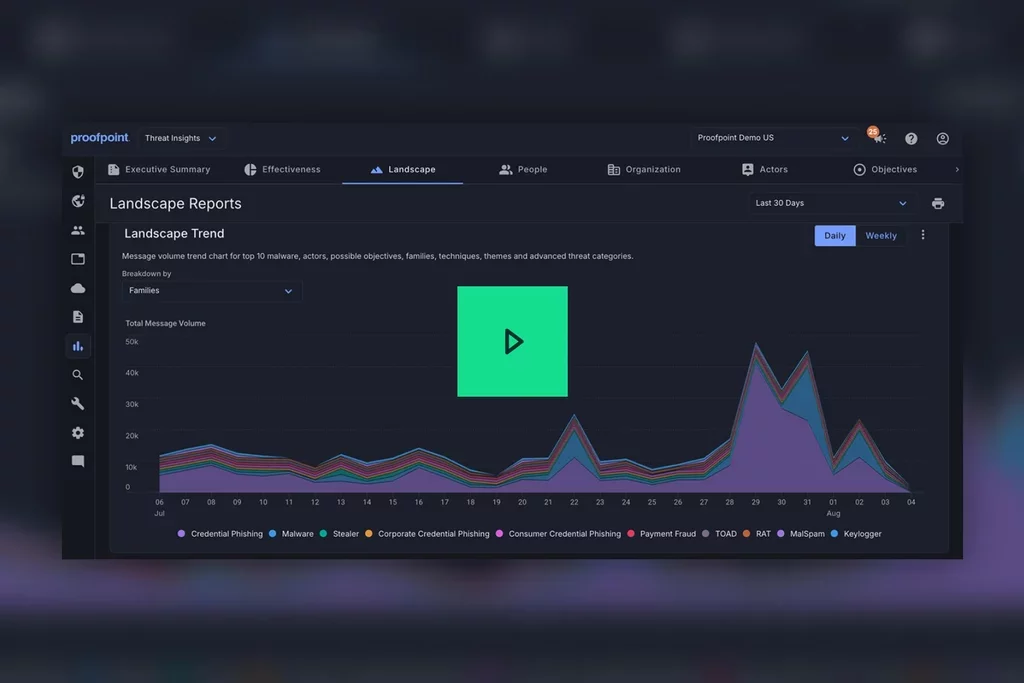

Stop evasive email threats

Detect advanced phishing, BEC, credential theft, and other human-targeted attacks with multilayered AI and threat intelligence.

Protect across the full email lifecycle

Protect users before delivery, after delivery, and at click time as messages and links change.

Reduce SOC workload

Automate threat remediation and abuse mailbox triage so security teams can focus on higher-risk incidents.

The Human Attack Surface

Cloud email attacks target people, not infrastructure

Modern email attacks use impersonation, social engineering, compromised accounts, and malicious content to target people. Microsoft 365 provides a strong foundation for email protection, while specialized cloud email security can add defense in depth for advanced, multistage, and multichannel threats. Organizations need visibility into behavior, identity, and message activity so they can identify human risk and respond across the full email lifecycle.

99 %
of organizations were targeted by account takeover threats
67 %
experienced at least one successful account takeover
88 %
experienced abuse after an account was compromised

Product Capabilities

Detect and stop email threats before, during, and after delivery

Proofpoint Core Email Protection uses multilayered AI, threat intelligence, and behavioral analysis to stop advanced email threats throughout the message lifecycle. It can detect threats before delivery, remove malicious messages after delivery, protect users when they click risky links, and help identify compromised accounts.

Features

Pre-Delivery URL Sandboxing

Rewrite, quarantine, and detonate suspicious URLs before delivery so users don’t see weaponized links.

Post-Delivery Remediation

Automatically remove malicious messages from inboxes when URLs become weaponized after delivery.

Click-Time Protection

Deliver contextual warnings and isolate risky browsing when users click links in delivered messages.

01 04
Cybersecurity professionals reviewing threat data on a computer monitor

Augment Microsoft 365

Strengthen Microsoft 365 email security beyond native controls

Microsoft 365 provides baseline email security, but stopping targeted attacks requires deeper visibility into human risk, identity compromise, and post-delivery threats. Core Email Protection deploys alongside Microsoft Defender via API or gateway, adding advanced detection, automated remediation, and user-level risk insights.

Features

API-Based M365 Deployment

Deploy via Microsoft Graph API with no MX changes. Start protecting in days, not weeks.

Very Attacked People™

Identify your most targeted users and prioritize stronger protection where targeted human risk is highest.

Unified SOC Visibility

Identify and respond to Proofpoint detections directly within your Microsoft security console.

01 04

Why Proofpoint

Proofpoint cloud email security vs. native M365 protection

CapabilityNative Microsoft 365 ProtectionProofpoint Email Protection
BEC protection Provides built-in email protection that relies more on native detections for BEC attacks Uses AI, behavioral analysis, relationship intelligence, and computer vision to detect BEC and social engineering
Post-delivery protection Includes post-delivery protection, but advanced remediation and visibility require additional Microsoft security services Rescans delivered email and automatically removes newly identified threats
Account takeover response Detects identity threats, but post-compromise investigation and response are more limited Detects compromised accounts, reverses malicious mailbox and MFA changes, and removes suspicious apps
Threat investigation Investigation tools focus on Microsoft security data and telemetry Gives security teams a unified view of threats, attack timelines, and investigations
Deployment flexibility Focuses on API-based protection within Microsoft 365 Deploy through Microsoft Graph API or a secure email gateway, with one view across both
Human-targeted attacks Provides core email protection, with many organizations adding specialized security for advanced attacks Stops phishing, BEC, account takeover, and other people-targeted attacks across the email lifecycle

Stop threats everywhere your people work

Extend protection beyond email to Teams, Slack, SharePoint, OneDrive, and other cloud collaboration apps with Proofpoint Collaboration Security Prime.

Explore Collaboration Security

Request a Demo

Stop human-targeted threats across Microsoft 365 and cloud apps throughout the email lifecycle. Request a demo to see for yourself.

Frequently Asked Questions

Cloud email security protects against phishing, business email compromise (BEC), malware, account takeover, and credential theft in platforms like Microsoft 365 and Google Workspace. Modern email security solutions analyze threats and understand intent before delivery, after delivery, and at click time. This helps security teams stop attacks that change after reaching the inbox. Cloud email security can also help secure collaboration tools, reduce human risk, and prevent data loss caused by compromised accounts.

Microsoft 365 provides built-in email protection, but targeted, AI-assisted attacks still bypass native defenses. Organizations should add cloud email security to better protect against phishing, BEC, credential theft, and account takeover. Advanced email security solutions add behavioral analysis, post-delivery remediation, click-time protection, and overall threat visibility. These controls strengthen Microsoft 365 security without disrupting mail flow or changing the user experience.

Cloud email security solutions stop emerging attacks including advanced, multi-stage phishing, spear phishing, business email compromise (BEC), ransomware, malware, malicious URLs, credential theft, QR code, and account takeover attacks. Advanced platforms also detect social engineering attacks that bypass traditional spam filters and signature-based detection.

The most effective secure cloud email solutions continue scanning messages even after delivery to identify post-delivery weaponized links, compromised accounts, and evolving threats.

API-based cloud email security connects directly to platforms like Microsoft 365 through services such as Microsoft Graph API. This approach allows email security solutions to scan messages, detect threats, remove malicious emails after delivery, and monitor compromised accounts without changing MX records or mail flow routing. API-based deployment also improves visibility into post-delivery threats, cloud collaboration activity, and human-targeted attacks.

Organizations reduce human risk by combining advanced email security with adaptive protection and security awareness training. Modern platforms identify highly targeted users, detect risky behavior, and apply stronger controls where attacks are most likely to succeed. Real-time warnings and targeted training help employees recognize evolving BEC and phishing attacks, avoid credential theft, and respond safely to suspicious messages.

Cloud email security helps prevent data loss by detecting compromised accounts, malicious forwarding rules, phishing attacks, and unauthorized access to sensitive data. Advanced email security solutions stop attackers from using stolen credentials and spreading malicious emails across cloud environments. Many platforms also extend protection to channels beyond email, including Teams, Slack, SharePoint, and OneDrive, to reduce the risk of sensitive data exposure.