
Key Takeaways
- SSO Password Guard protects the critical window between credential exposure and account takeover.
- It detects corporate password reuse on unsanctioned sites in real time, directly in the browser.
- Credential exposure signals can help security teams trigger targeted training and reduce repeat risk
There's a window in every account takeover that no one owns. Proofpoint built a product that lives inside it.
Think about the last account takeover your organization dealt with. Or the one you didn't catch in time. Walk back the chain: how did the attacker get those credentials?
Almost certainly, a user handed them over—probably because they were tricked by a convincing login page, or a third-party app that seemed harmless, or a site they used their corporate password on. And when that happened, no controls intervened. The credential crossed the perimeter, and no one knew.
The moment between when the user makes a mistake and the attacker uses those stolen credentials is one of the most dangerous windows in modern security. And until now, it has been almost entirely unguarded.
Today, we're changing that. Proofpoint SSO Password Guard is now available as part of Collaboration Security Tier 2, Tier 3, and Prime.
The Reality Check
To understand just how widespread of a problem this is, consider these statistics:
- 99% of organizations were targeted by account takeover (ATO) attacks last year.
- 71% of people knowingly take risky actions like reusing passwords—they understand the risk, yet they do it anyway.
- 149M stolen credentials were found in a single unprotected database in January 2026 alone.
Why the Gap Exists
Most of today’s security stack—email filtering, threat detection, endpoint detection and response (EDR)—is built to intercept the attacker or identify whether an account has been compromised. Those approaches work and remain essential, but no single control provides complete coverage, which can leave gaps between prevention and detection that attackers increasingly exploit.
Consider the sequence:
- A phishing email or Teams message arrives. Your collaboration security filters it. 99% of these threats are stopped, but not all of them.
- When a threat gets through, the user clicks a link or visits a lookalike page.
- They're prompted to log in. They type their corporate password.
Once they enter their credentials, attackers can use them.
Multi-factor authentication (MFA) doesn't prevent it. It protects access to your systems, but not the misuse of your credentials outside them. A password manager doesn't prevent it, either—it helps users create strong passwords, but it can't stop someone from typing their corporate credentials somewhere they shouldn't.
The question is: what happens in the window between when the credentials are leaked and account takeover?
Proofpoint SSO Password Guard is the answer to that question
Proofpoint SSO Password Guard protects organizations at-the-moment the user enters their password.
How it works
SSO Password Guard runs through the Proofpoint ZenWeb browser extension. This is the same extension that’s already deployed as part of Collaboration Security. It requires no new agent, no additional infrastructure, and no workflow change for users.
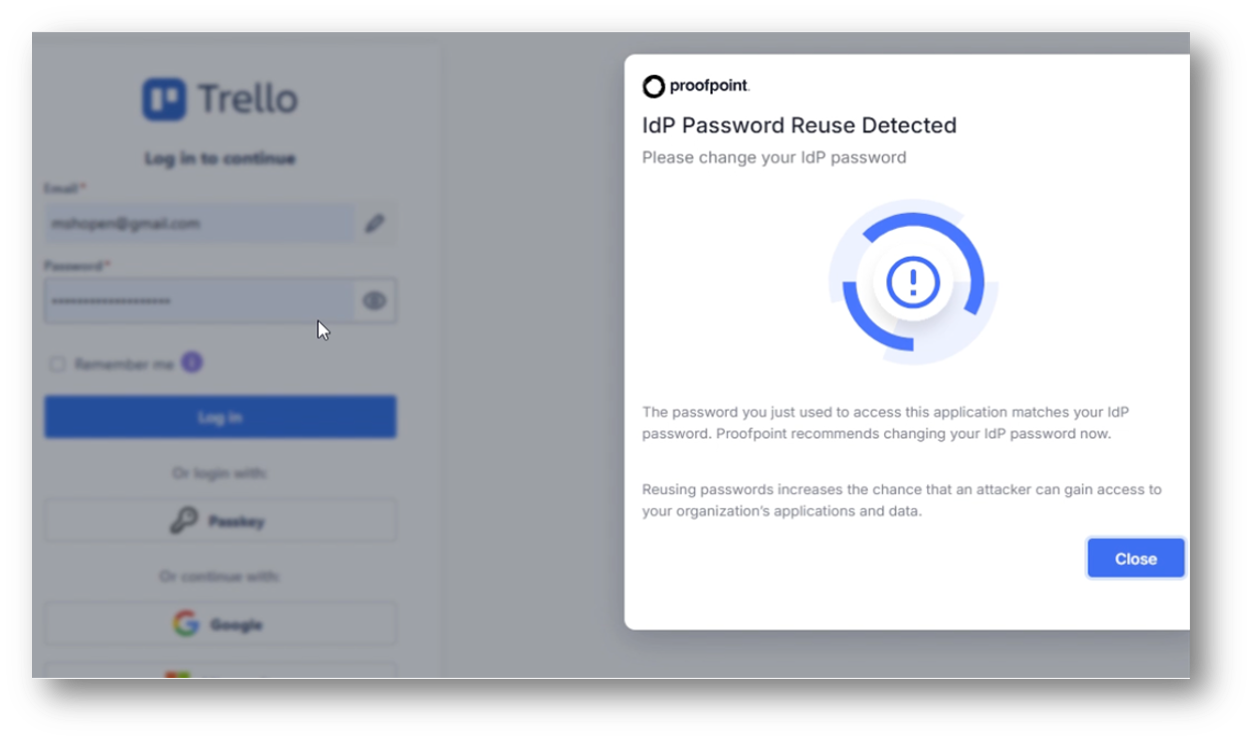
Figure 1. Example of the SSO Password Guard alert.
Here's how it operates:
1. It learns what “the corporate password” is.
When a user successfully authenticates to their organization’s identity provider on an approved corporate site, SSO Password Guard securely establishes a reference point. It now knows what their corporate credentials look like.
2. It detects reuse in real time.
As users navigate to non-corporate sites and enter their corporate password—whether a phishing page, a shadow SaaS app, or any unsanctioned destination—SSO Password Guard detects it at-the-moment of submission.
3. It intervenes to help change unsafe behaviors.
An in-context browser popup appears immediately. The user is informed of the policy violation and guided to take corrective action. The event is logged for the security team, giving analysts visibility into who did what, and where.
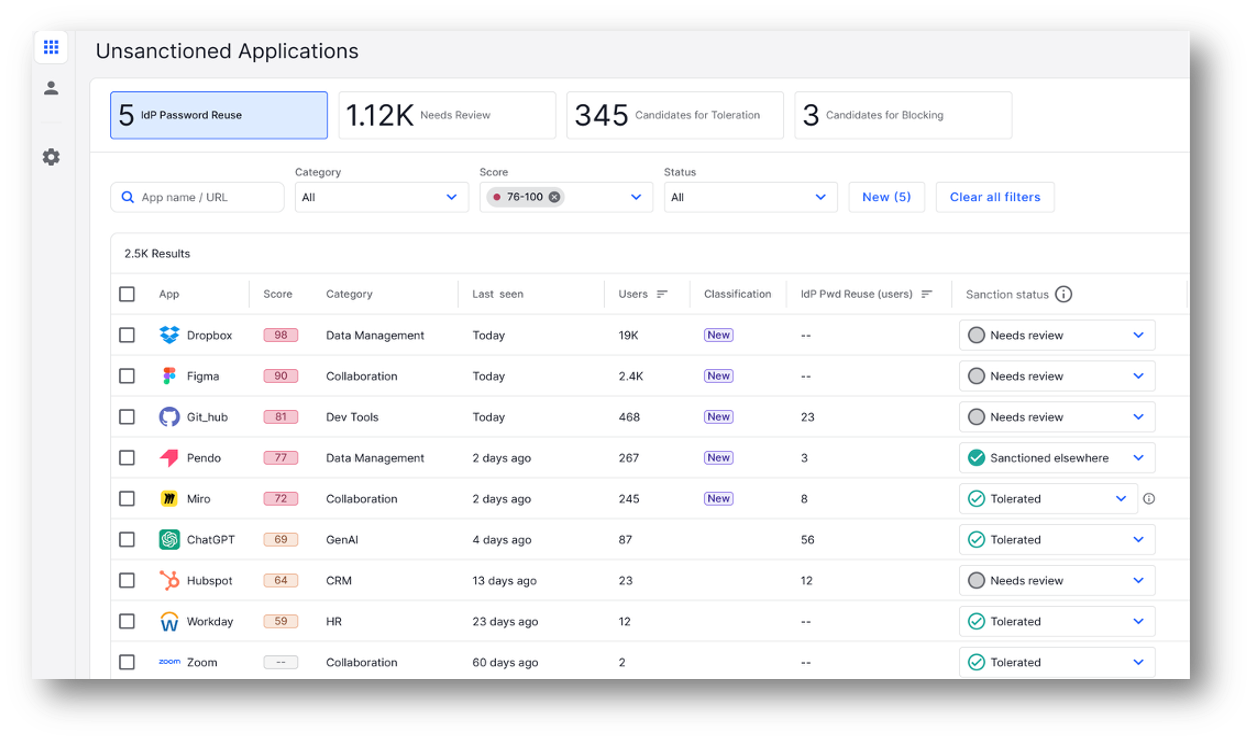
Figure 2. Example of SSO Password Guard admin dashboard.
This simple three-step sequence happens in real time, every time, across Chrome, Edge, and Safari. There is no alert lag and no waiting for a SIEM to correlate signals.
Where it fits
Account takeover protection has always required a layered approach. Prevention controls like Proofpoint Core Email Protection and Messaging Protection stop most of the credential phishing before they ever reach users. Proofpoint ATO Protection identifies compromised accounts after suspicious activity begins. But between those two layers—after threat delivery and before account compromise—there has been a gap with no dedicated owner.
SSO Password Guard fills that gap. It’s a critical layer in a complete defense:
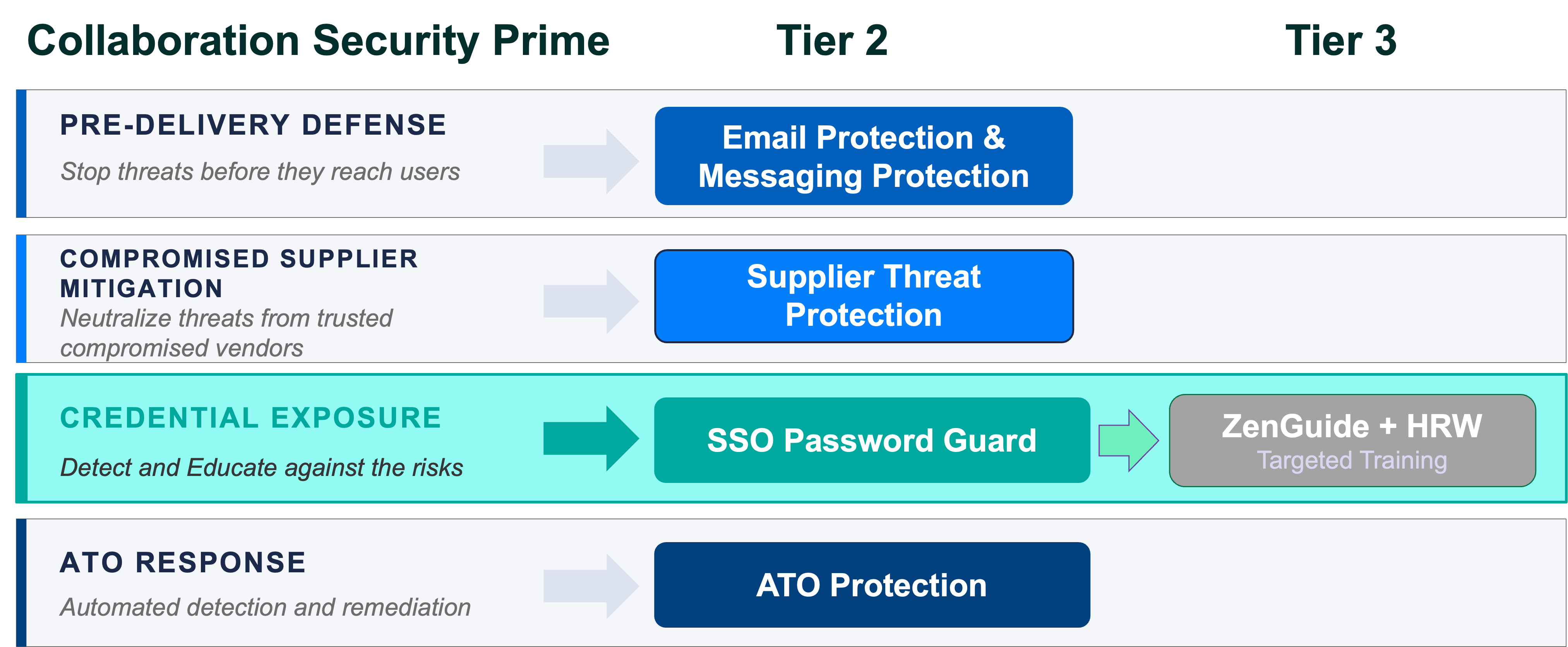
Figure 3. Proofpoint Defense-in-Depth against account compromise
Two things are worth noting about preventing credential exposure. First, it represents a mitigation layer today—detecting exposure and intervening in real time. However, it will evolve into a prevention layer soon. Secondly, it has a direct line into human resilience: when security teams can see exactly which users repeatedly expose credentials and on which sites, they can use that signal to trigger targeted training through Proofpoint ZenGuide and Human Resilience Workbench (HRW). The detect-to-train loop closes in a way no other approach enables.
The business case
The business case for reducing credential exposure is straightforward: it comes down to incident cost. Every account takeover that doesn't happen is an investigation that doesn't happen, a password reset workflow that doesn't run, and a potential breach that doesn't escalate. Fewer compromised accounts mean less security operations center (SOC) time, less tooling overhead, and lower downstream risk.
There’s data that validates this directly. Proofpoint Prime customers see:
- 75% lower likelihood of a material breach
- 237% return on investment across the Prime platform
- 40% lower total cost of ownership compared to fragmented point solutions
And in one deployment, Proofpoint Account Takeover Protection paid for itself in under 72 hours after intervening on a live attack — before it became a breach.
SSO Password Guard supports those outcomes by reducing the number of credential exposures that enter the ATO pipeline in the first place. Fewer exposures upstream mean fewer incidents downstream.
Availability
SSO Password Guard is available now in Collaboration Security Tier 2, Tier 3, and Prime.
Existing Collaboration Security customers at Tier 2 and above can activate SSO Password Guard through the ZenWeb browser extension already in their environment—no additional deployment required.